Industrial Ceramic Tiling Systems
Traditional Tiling
This technique includes the use of ceramic tiles bedded and jointed or grouted in cement or epoxy. Ancorite has experience of many tiling materials, including Slate, Limestone and Granite. The company carries out this traditional method of tiling in retail developments, car workshops and in the industrial sector.
Vibration Tiling
Vibration tiling provides a fast-track solution for industrial tiled flooring. The Ancorite Vibro SD tiling technique uses a semi-dry modified screed, incorporating polymer or fibre reinforcement, laid onto an early-stage concrete sub-base.
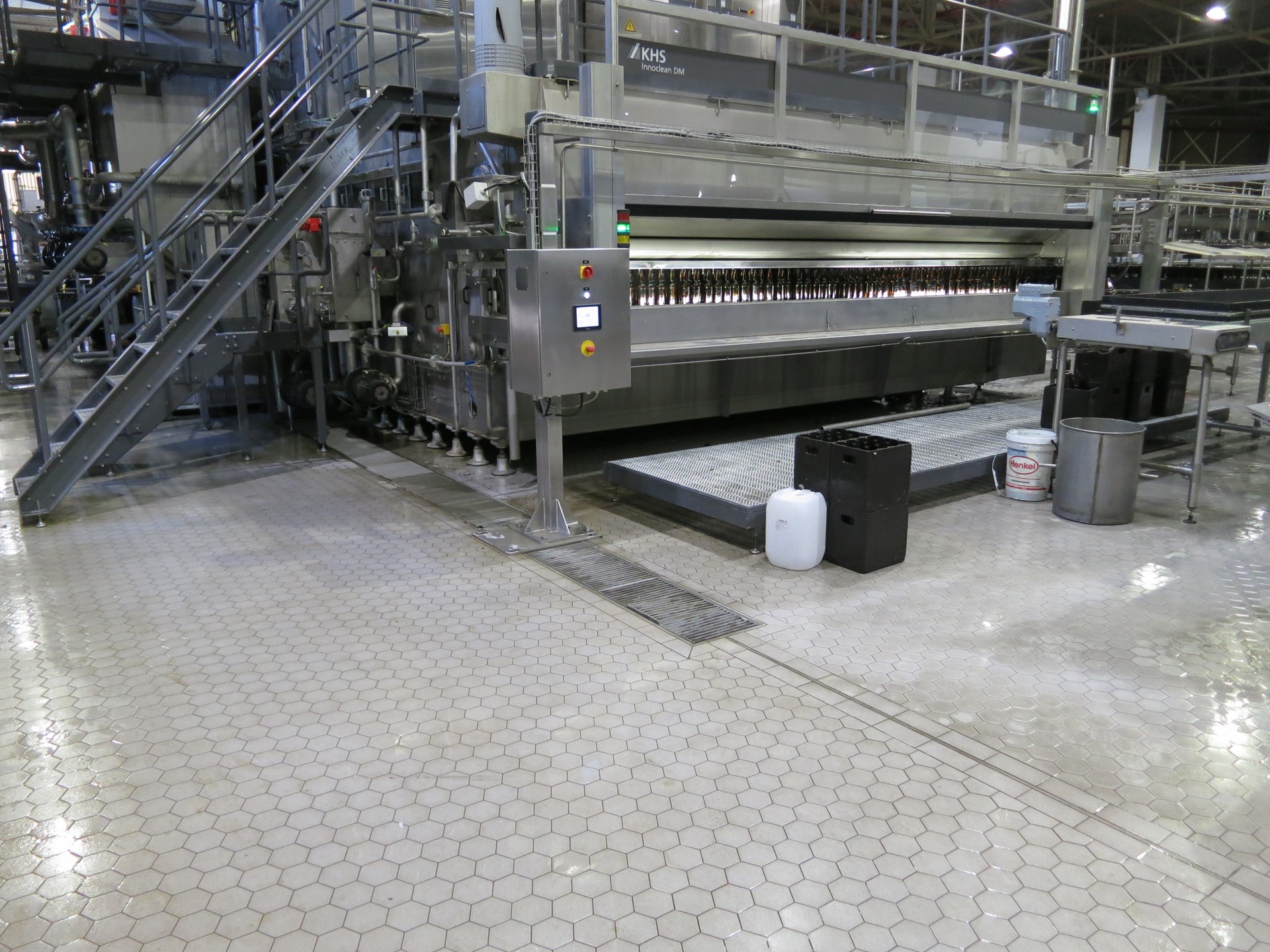
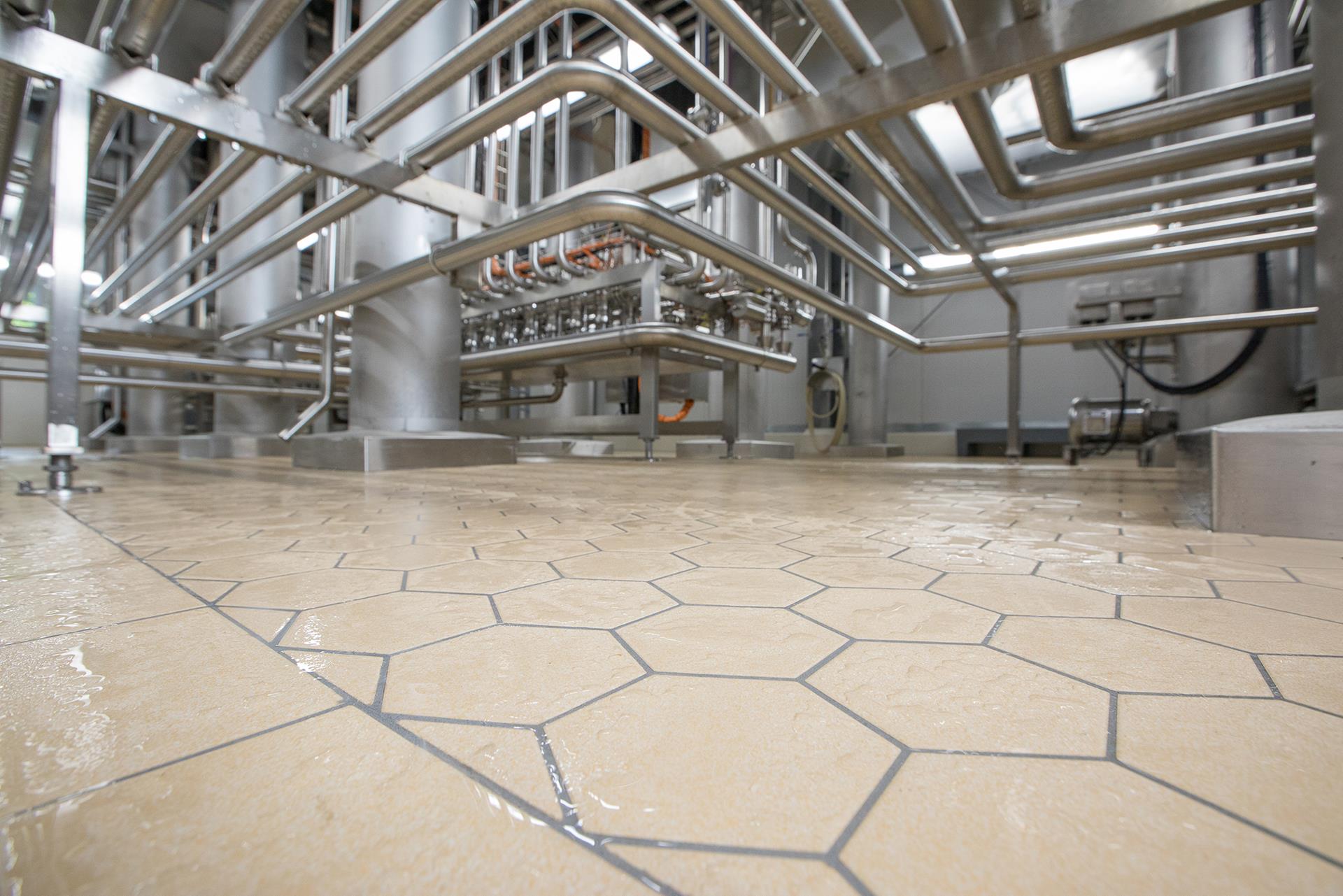
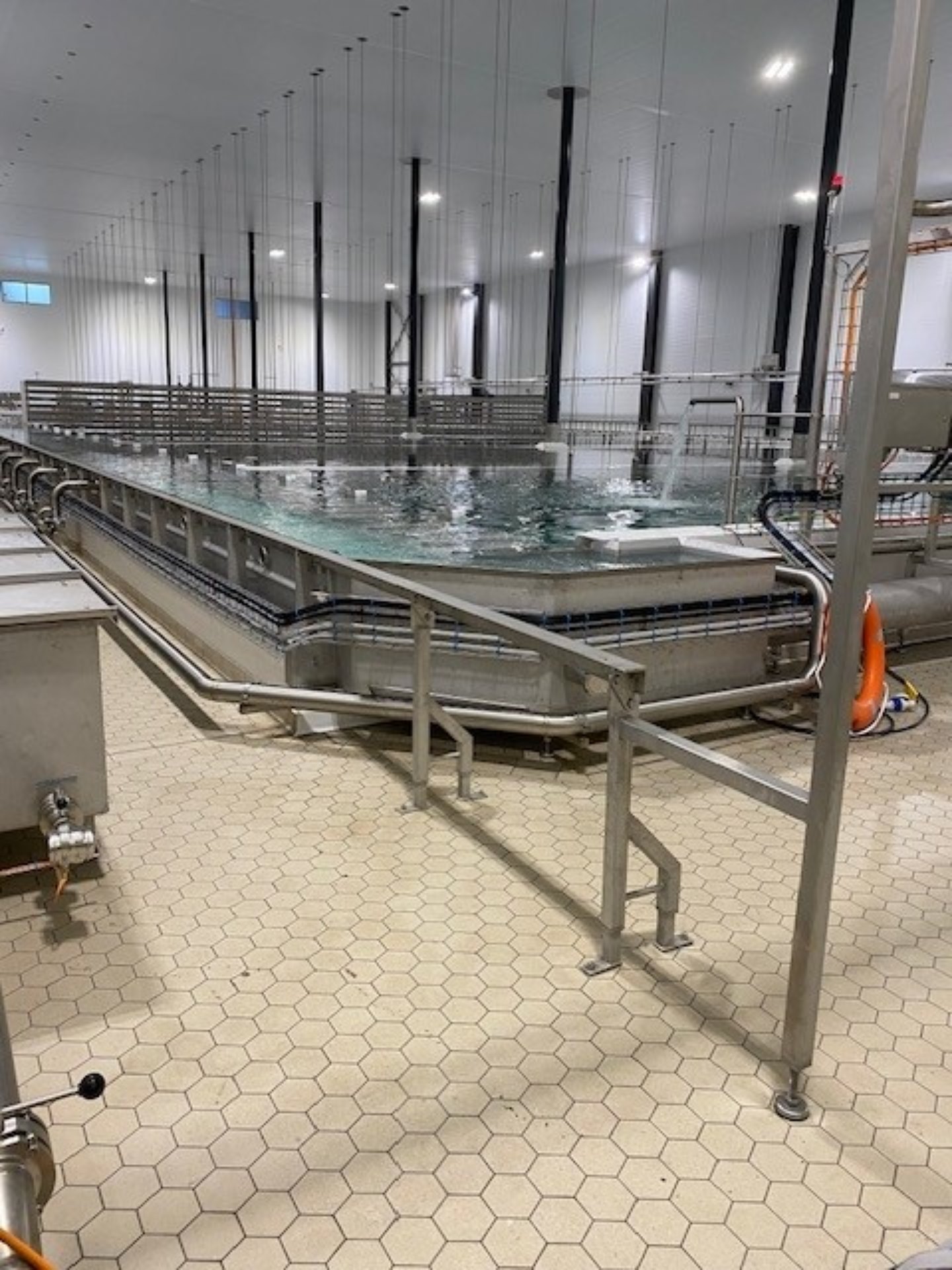
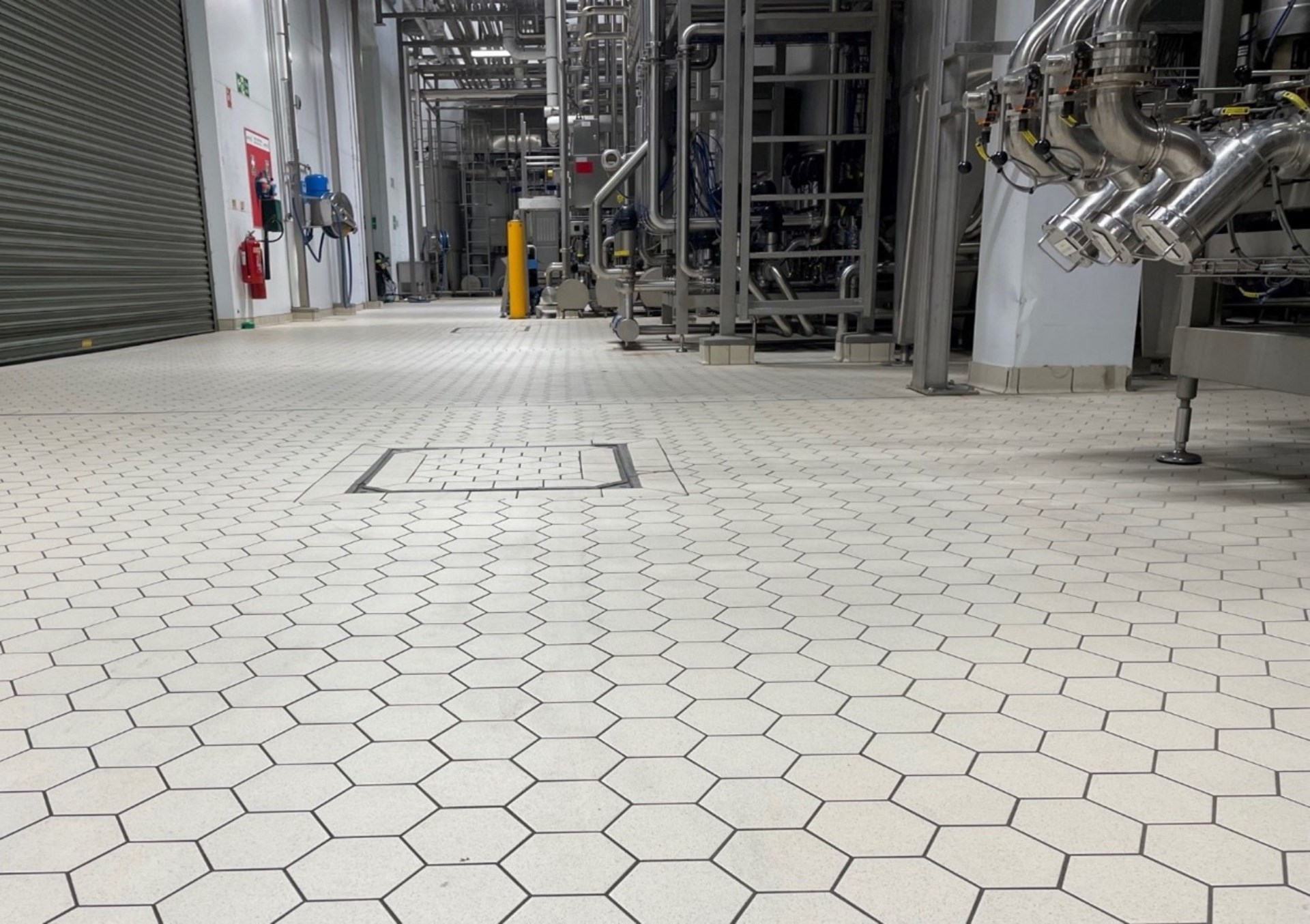
A rectangular or hexagonal vitrified tile is then laid onto a polymer slurry and secured into the screed using a rolling plate vibrator. This sequence is completed within the same working day, helping to minimise the need for extended screed or concrete curing times.
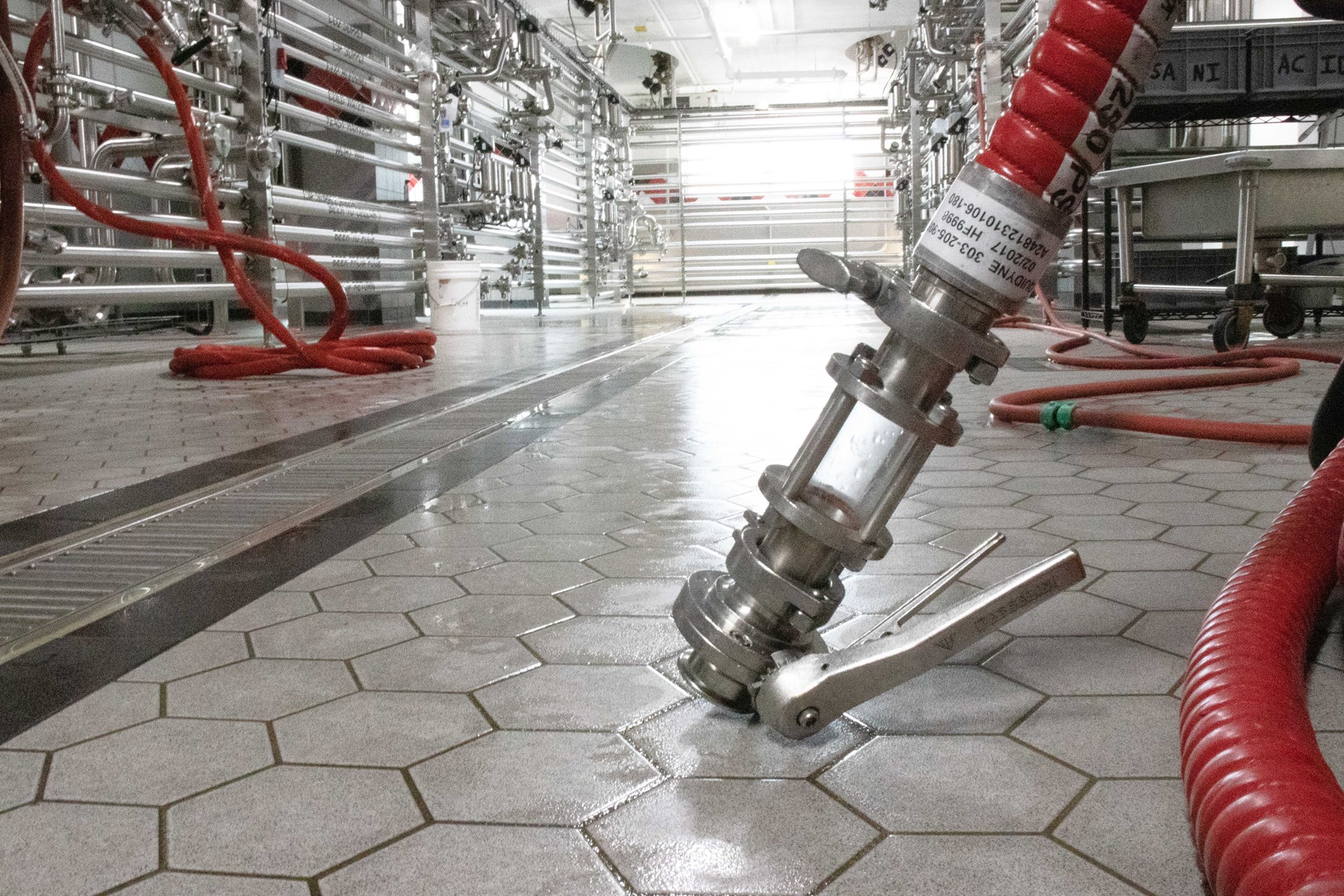
An epoxy or cementitious grout is applied shortly afterwards to create a super-flat, hard-wearing and decorative tiled floor. The system has been used extensively within the food and beverage industry and is also suitable for pharmaceutical environments and main dealer car workshops. Ancorite commonly uses the Argelith range of tiles for these applications.
For more heavily stressed areas, the Ancorite Vibro HD system incorporates a glass-cloth reinforced epoxy layer beneath the tiling to help reduce permeability. This heavy-duty system is particularly well suited to demanding environments such as brewing facilities.
Corrosion Resistant Tiling
This system has been traditionally used for areas of flooring that are under severe chemical or solvent attack. The Ancorite CR system can be used in primary pharmaceutical and chemical environments. The use of a chemical resistant membrane as a secondary barrier, a specialist mortar such as epoxy, furane or vinyl ester together with a vitrified tile provides an impervious barrier against most aggressive chemicals and solvents. The use of a carbon filled mortar, and a wire grid provides anti-static properties, a requirement for many pharmaceutical applications.